

Where this service fits
The existing form factor, display and interfaces largely meet the project. The main differences concern branding, application deployment and operator interaction. Light customization prioritizes supported platform features. New interfaces, board changes or seal redesign require a deeper engineering assessment.
Define engineering scope and deliverables
| Workstream | Assessment focus |
|---|---|
| Branding and deliverables | Assess nameplates, startup graphics, packaging and supplied documentation; review branding separately from regulatory labels. |
| Application and system configuration | Assess app provisioning, auto-launch, key mapping, feature controls and installation policies for the selected OS release. |
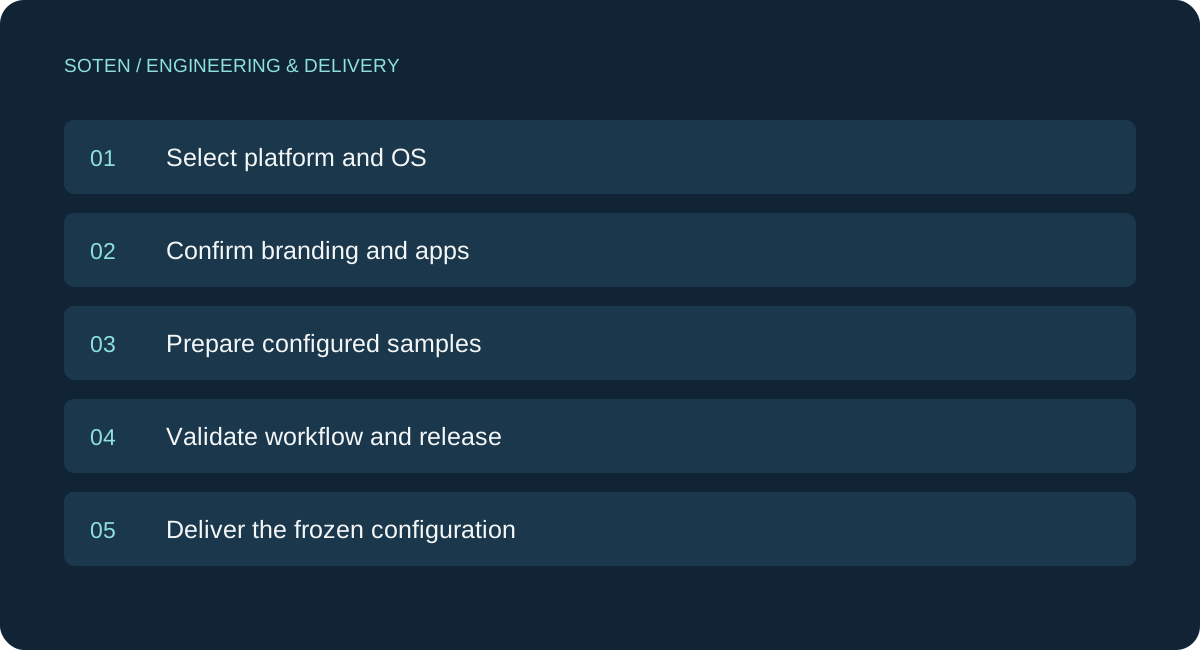
Project path from inputs to acceptance
| Stage | Result to confirm |
|---|---|
| Select platform and OS | Model, OS release, accessories and supported options |
| Confirm branding and apps | Authorized artwork, application packages, settings and permissions |
| Prepare configured samples | Reproducible firmware, application and configured sample |
| Validate workflow and release | Workflow, reboot and reset test results |
| Deliver the frozen configuration | Ordered configuration, release record, labels and packaging check |
Product, project and engineering responsibilities
| Role | Decision focus | Confirm |
|---|---|---|
| Product owner | User tasks, feature trade-offs and product releases | Requirement priorities, compatibility and interaction examples |
| Project and procurement lead | Scope, budget, milestones and acceptance | Engineering and purchase cost structure, dependencies and deliverables |
| SOTEN engineering and manufacturing | Device feasibility, integration and production consistency | Configuration and interface baseline, samples and test evidence |
| Software and integration partner | Applications, backend and site deployment | Applications and APIs, runtime, joint debugging and support ownership |
Prepare these inputs
| Input area | Details |
|---|---|
| Application readiness | Provide a signed package, dependencies, permissions, startup behavior and reproducible test tasks. |
| Delivery readiness | Provide brand authorization, artwork, packaging requirements, device naming and backend enrollment method. |
Validation, acceptance and change control
Test first boot, application launch, login, capture or form tasks, reboot recovery and factory reset. Link sample firmware, application versions and settings to the production order. When MDM is required, jointly validate enrollment, policy delivery and update paths.
Product platforms to evaluate
Use these platforms for selection and sample evaluation. Confirm operating systems, modules and accessories per variant; a fully custom device is not equivalent to the reference platform.
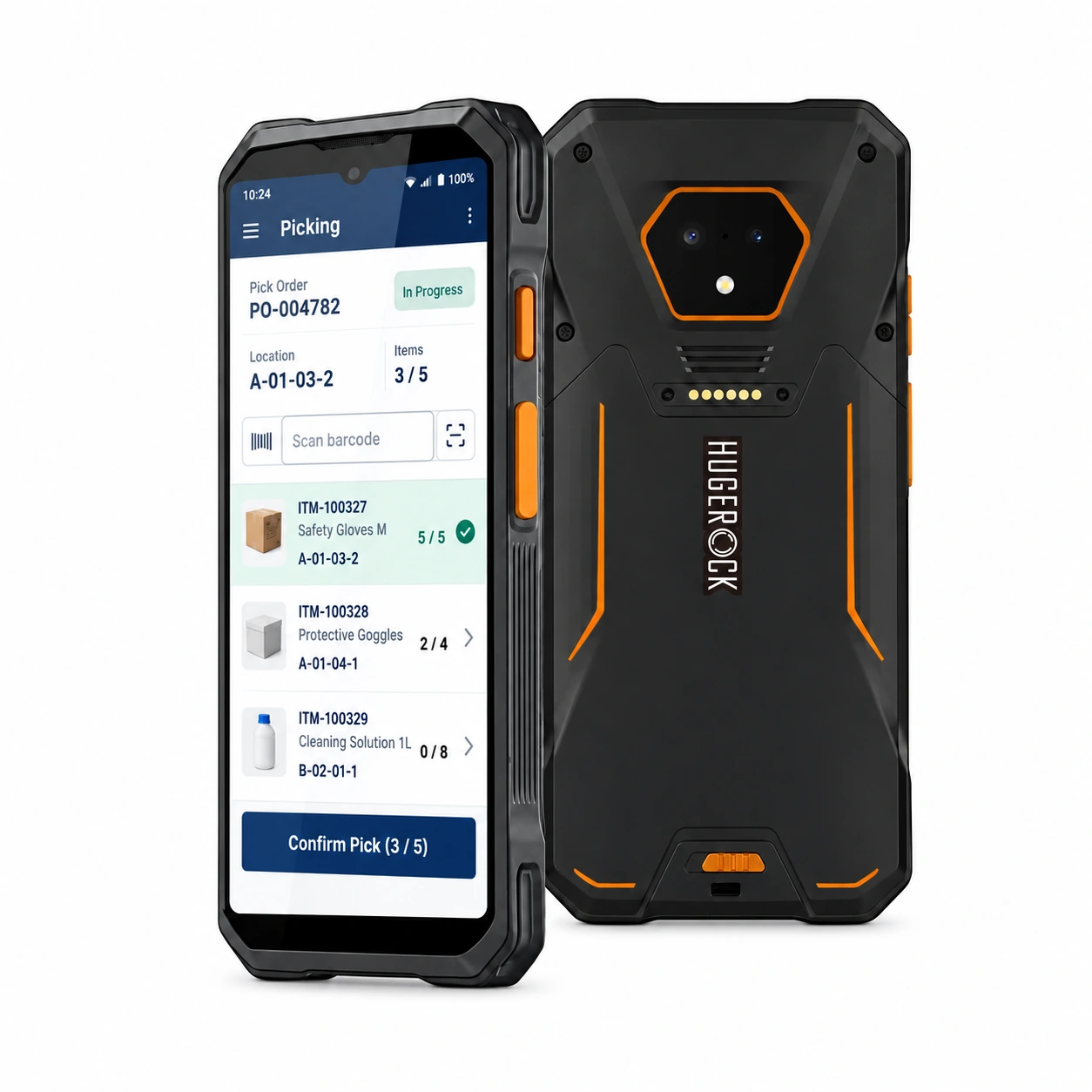
H61
Starting point for handheld application, scanning and OS configuration validation.
View platform and configurations ↗
H81
Configure forms and supported modules; validate applications separately on each system branch.
View platform and configurations ↗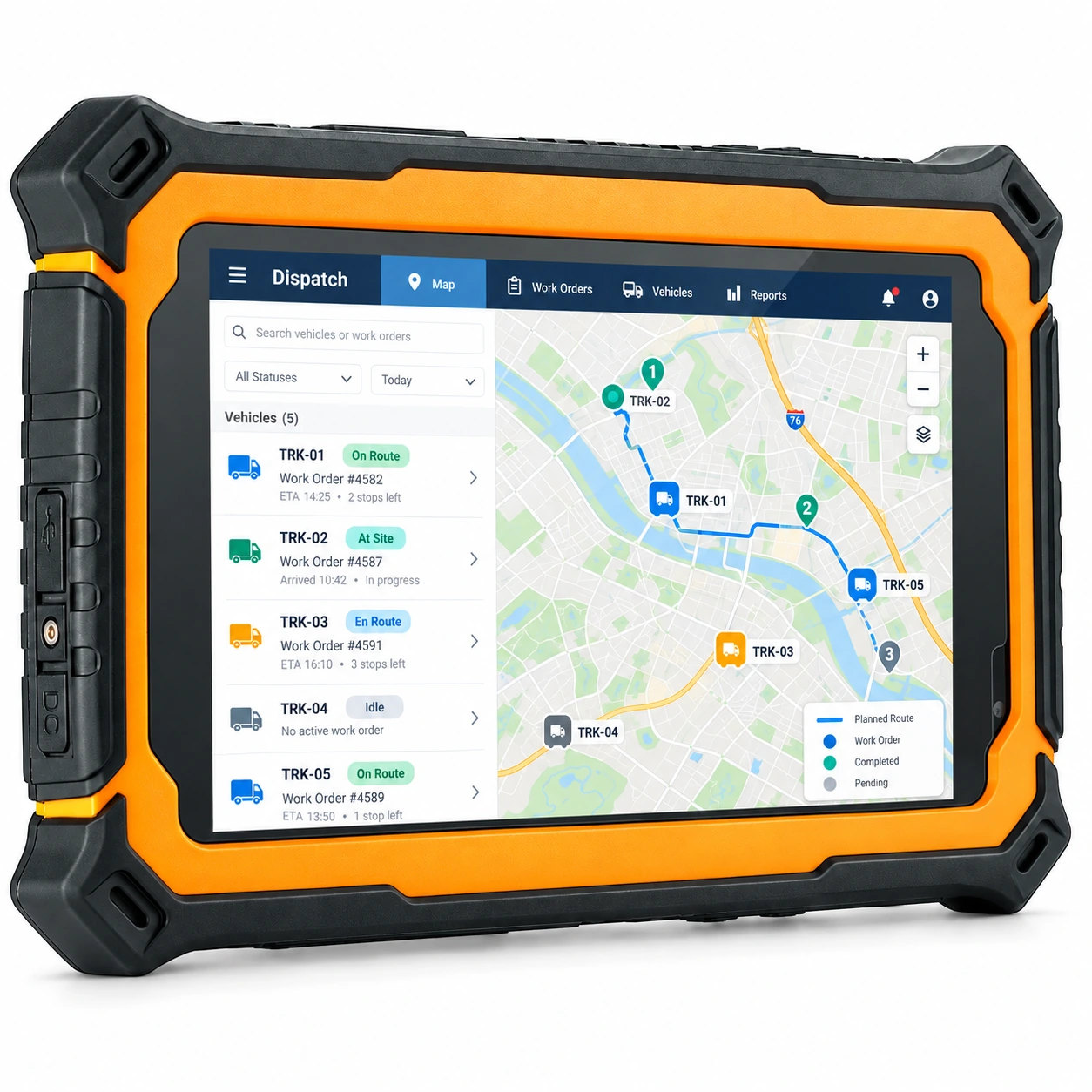
T71
Established tablet platform for navigation, capture and mounting configuration assessment.
View platform and configurations ↗
W105
Candidate for established Windows applications, peripheral drivers and enterprise provisioning.
View platform and configurations ↗Project questions
Can an existing certification be reused?
Check the delivery model, OS, branding and destination market. Existing documentation does not automatically cover every brand, radio configuration or software change. Confirm additional testing or filing during scope review.


