
Project fit & buying priorities
Fleet operators, dispatch software vendors, vehicle installation providers and procurement teams can assess the workflow, integration and ongoing support together. Operations should define tasks and exceptions, IT should validate interfaces and access, and procurement should compare complete configurations and service scope.
Vehicle type, power, mounting, GNSS antenna and cellular coverage jointly determine usability. Define ignition-off, standby and remote-management policies.
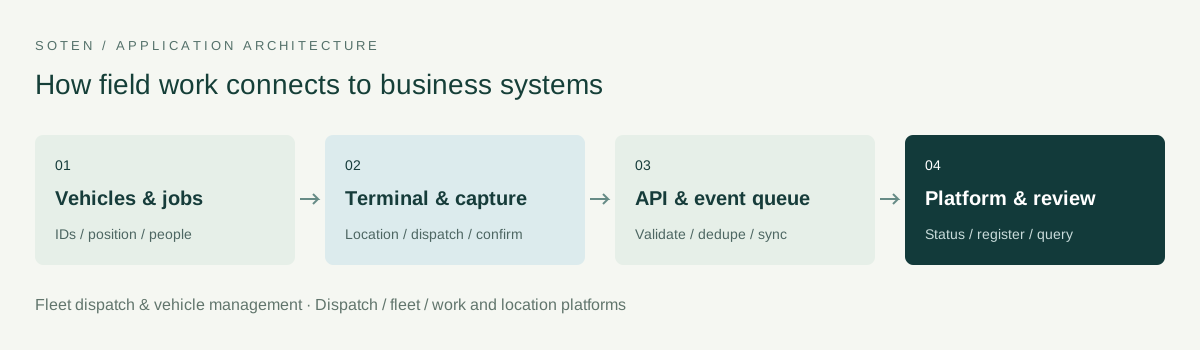
From field action to a complete record
- 01Register vehicle and shift
- 02Receive location and dispatch jobs
- 03Confirm arrival, boarding or work
- 04Return exceptions and shift records
System integration & delivery responsibilities
Use vehicle, shift, assignment, arrival event, driver confirmation, position status as the integration checklist. Define field ownership, required values and exception handling. Complete one representative job from terminal to API and backend review before scaling to more teams or sites.
SOTEN supplies terminals and interface support. Dispatch partners own assignments and operations; vehicle installers own power, mounting and field maintenance. Vehicle and dedicated control systems retain safety responsibilities.
Turn requirements into testable selection criteria
| Criterion | Confirm with the project team | Evidence to request |
|---|---|---|
| Use and configuration | Confirm capture methods, environment and operator interaction against the criteria above | Representative jobs, tags and peripheral list |
| Systems and interfaces | Dispatch / fleet / work and location platforms application version, fields, SDKs and protocols | Installable software, API specification and test account |
| Operations and support | Actual shifts, power, network, mounting and spare-unit plan | Full-shift test, installation drawing and support responsibilities |
Product platforms to evaluate
Select a platform by workflow, then confirm the branch, operating-system version and modules. The suggestions below do not mean every option is included in every configuration.

K101
In-vehicle dispatch interfaceVehicle or fixed-mount interface terminal; evaluate display, power and equipment interfaces.
View platform and configurations ↗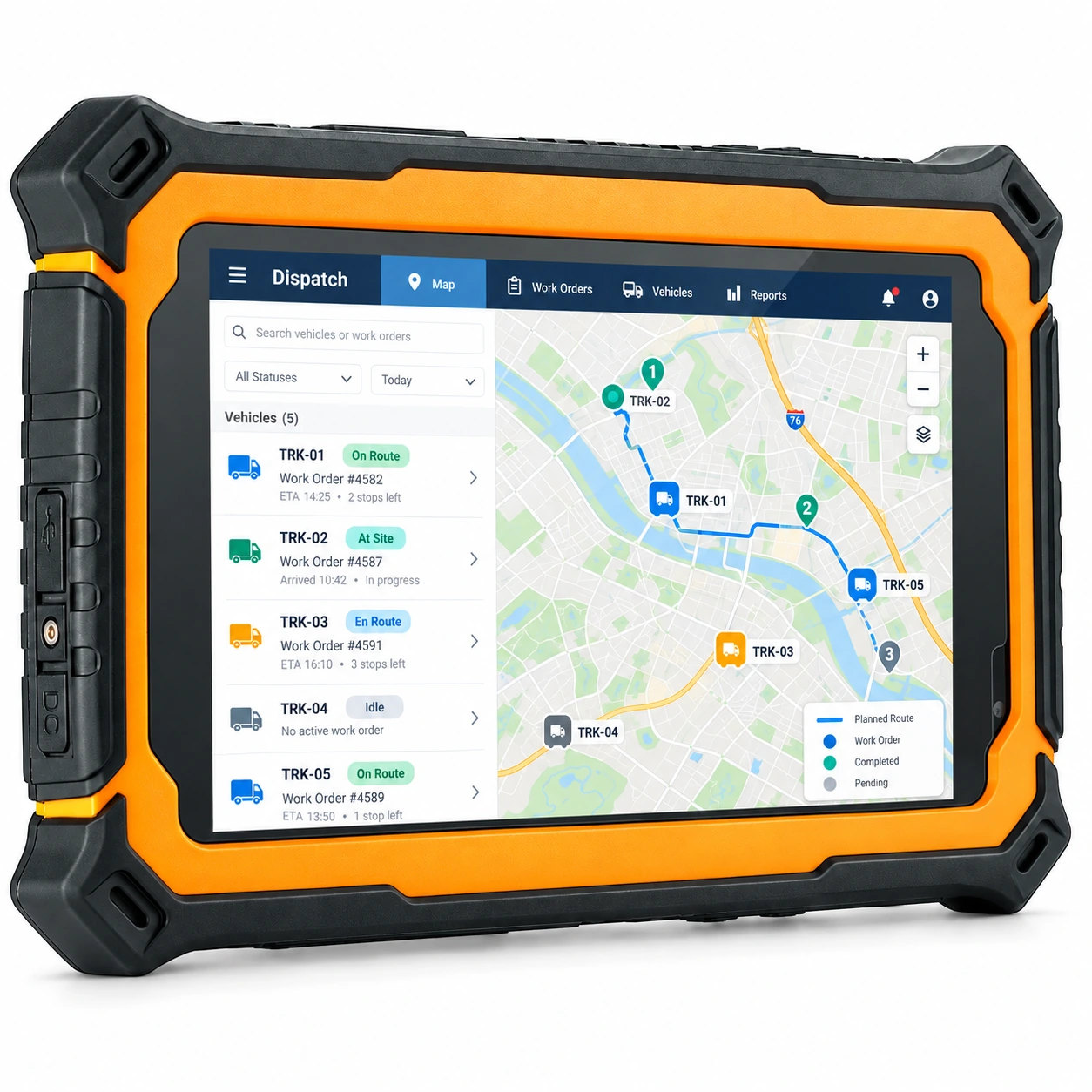
T71
Mobile or vehicle job terminalMobile and vehicle-workflow platform; evaluate location, capture and specialist application branches.
View platform and configurations ↗
H81
Field review & peripheral captureMultifunction tablet for business forms and capture options; select the system platform and module combination.
View platform and configurations ↗Pilot validation & procurement acceptance
Test coverage gaps, tunnels, duplicate assignments and parked restarts on typical routes; reconcile tracks with completed jobs.
- Operations: confirm completion, exception review and result retrieval against real workflows.
- IT / integration: verify fields, permissions, offline recovery and duplicate handling.
- Procurement / support: freeze the tested device, software and accessories, and agree delivery, spares and service terms.
Questions before the project starts
Can this connect to our existing system?
Dispatch / fleet / work and location platforms are integration targets, subject to application compatibility, interface access and SDK validation. Share the software version, API specification and an anonymized workflow sample for a device pilot. Agree device supply, integration and rollout as explicit work packages.
What should we prepare before selecting pilot devices?
Provide vehicle types, power, mounting position, peripherals, dispatch interfaces and typical operating routes. Include deployment region, estimated quantity, project stage and intended rollout date to define candidate configurations and a test plan.