Where this service fits
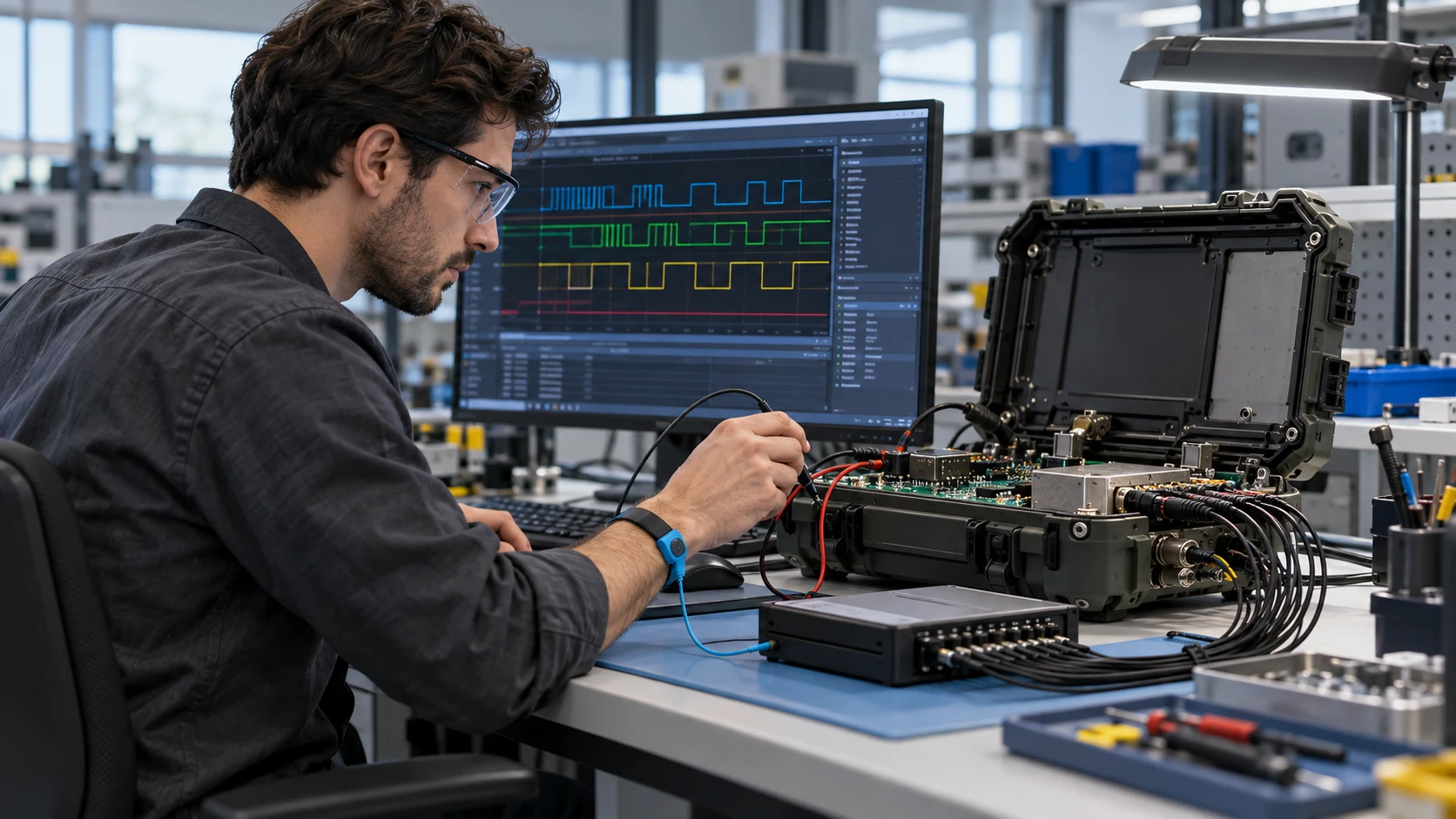
An established platform meets the core computing need, but capture modules, peripherals, mounting or system integration differ. Assess available space, interface resources, power and documentation impacts before separating reusable elements from new development.
Define engineering scope and deliverables
| Workstream | Assessment focus |
|---|---|
| Function and connectivity adaptation | Assess UHF, NFC, fingerprint, positioning and peripheral connectivity per platform; options are not assumed to coexist in every build. |
| Mechanical and system integration | Evaluate stack-up, antennas, seals, connectors, drivers, SDKs and application constraints together. |
Project path from inputs to acceptance

| Stage | Result to confirm |
|---|---|
| Build a platform gap list | Reused and new elements, interface resources and mechanical constraints |
| Verify module and interface feasibility | Module samples, protocols, power and connectivity results |
| Integrate samples and SDKs | Device sample, driver and SDK releases and integration records |
| Test changes and freeze configuration | Combined-operation, reliability and compliance impact results |
| Pilot deployment and production transition | Site-pilot outcome, controlled configuration and production requirements |
Product, project and engineering responsibilities
| Role | Decision focus | Confirm |
|---|---|---|
| Product owner | User tasks, feature trade-offs and product releases | Requirement priorities, compatibility and interaction examples |
| Project and procurement lead | Scope, budget, milestones and acceptance | Engineering and purchase cost structure, dependencies and deliverables |
| SOTEN engineering and manufacturing | Device feasibility, integration and production consistency | Configuration and interface baseline, samples and test evidence |
| Software and integration partner | Applications, backend and site deployment | Applications and APIs, runtime, joint debugging and support ownership |
Prepare these inputs
| Input area | Details |
|---|---|
| Modules and protocols | Provide peripheral models, protocols, supply range, sample tags or documents, output formats and licensing conditions. |
| Site and installation | Provide installation space, mount drawings, power source, cable routing, operator tasks and environmental requirements. |
Validation, acceptance and change control
Validate individual functions, combined operation, sustained load, network recovery and data consistency. Include mechanical and antenna changes in the relevant reliability and radio assessment. Hazardous-location builds require whole-device, accessory and certificate review; adding a module to a general-purpose unit does not establish explosion protection.
Product platforms to evaluate
Use these platforms for selection and sample evaluation. Confirm operating systems, modules and accessories per variant; a fully custom device is not equivalent to the reference platform.

H81
Evaluate capture options, OS branches and workflows as a complete configuration.
View platform and configurations ↗
T80
Platform with application branches for evaluating function differences and dedicated configurations.
View platform and configurations ↗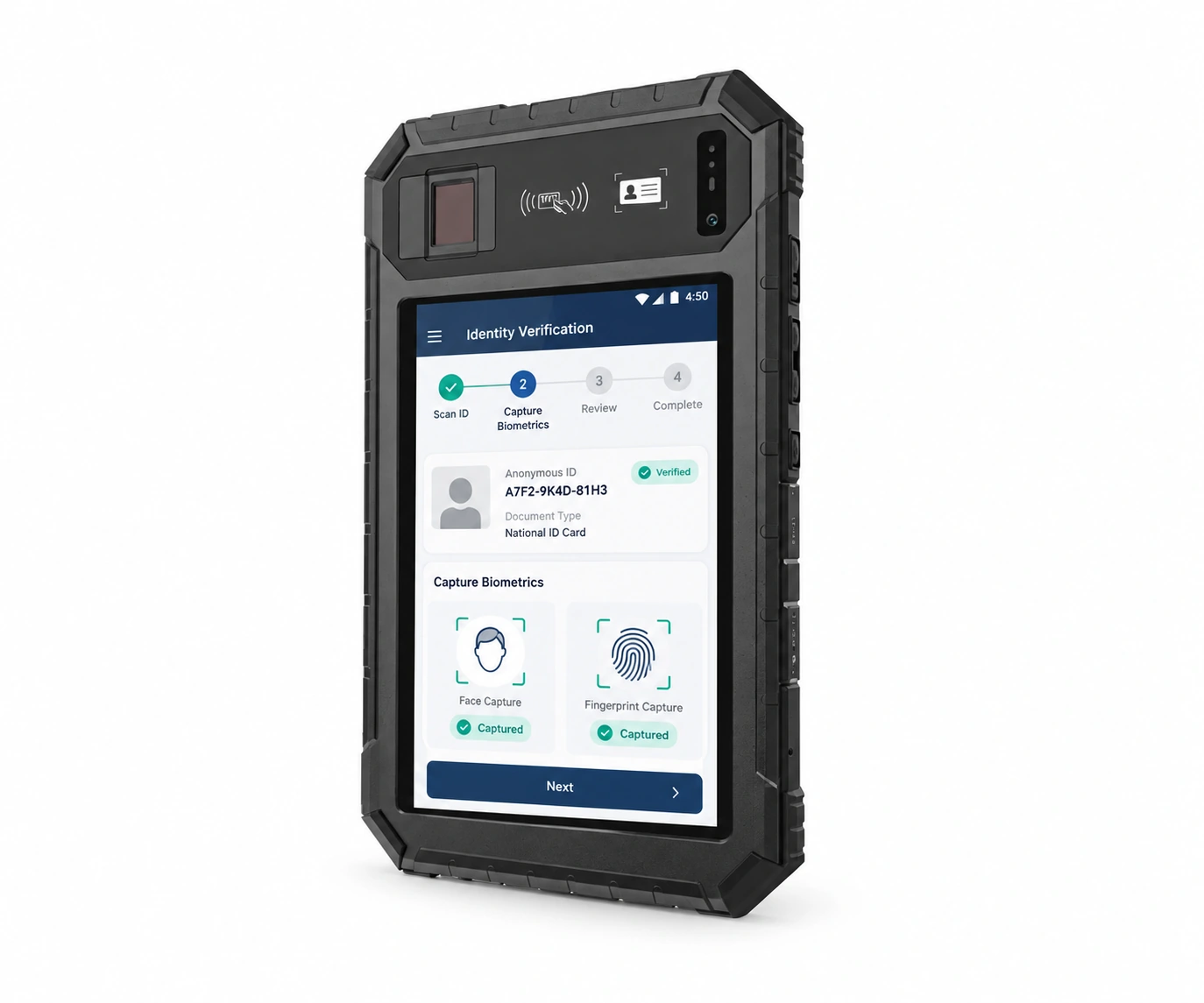
B81
Identity-capture platform for document, biometric SDK and workflow integration.
View platform and configurations ↗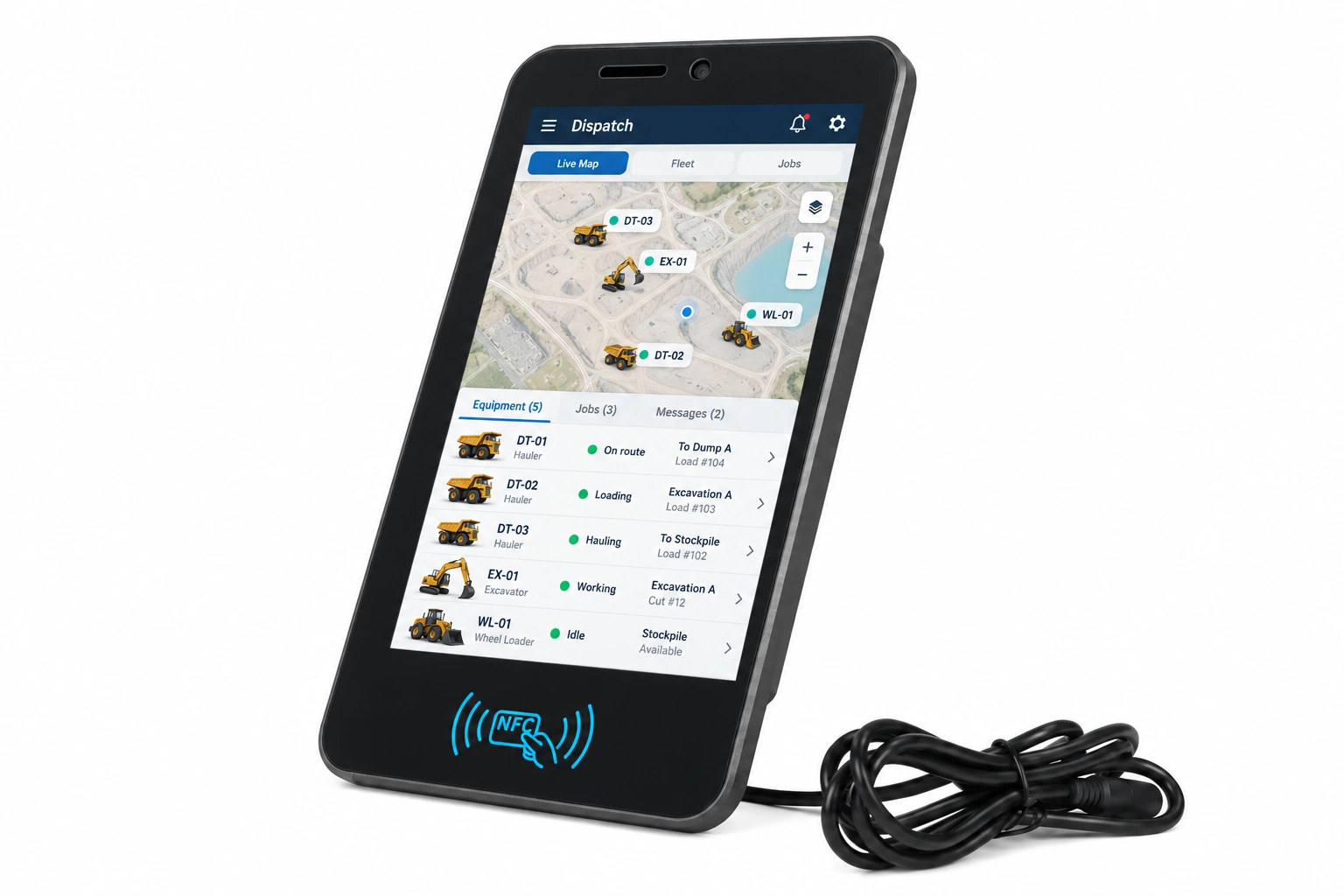
K80
Evaluate interface adaptation around vehicle display, mounting and peripherals.
View platform and configurations ↗Project questions
Can positioning, UHF and biometrics be combined?
Check space, interfaces, power, antennas and driver resources on the specific model, then test simultaneous operation. A capability catalogue describes assessment directions; engineering confirmation defines the actual build.