Where this service fits
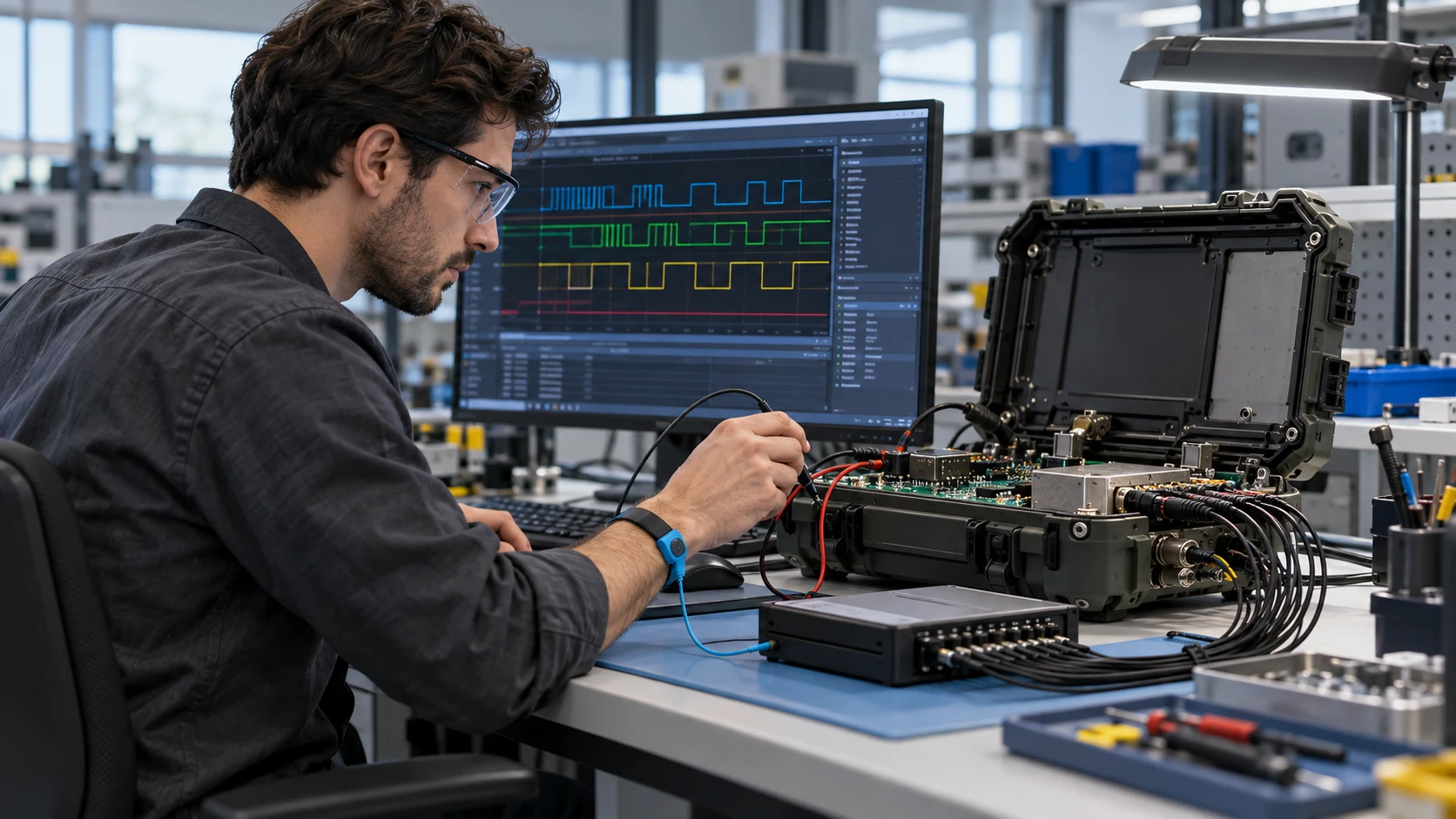
Your form factor, interfaces, performance or operating model differ fundamentally from established products, requiring a new enclosure, board or system design. Confirm product value, destination markets and manufacturability before defining controlled engineering tasks, samples and production evidence. Existing platforms may support early software validation; they do not define the final custom specification.
Define engineering scope and deliverables
| Workstream | Assessment focus |
|---|---|
| Product and device architecture | Define interaction, display, board, power, connectivity, capture and mounting, while assessing cost and supply continuity. |
| Design and development deliverables | Agree industrial and mechanical design, electronics, system integration, tooling, samples and validation documentation within the scope. |
Project path from inputs to acceptance
| Stage | Result to confirm |
|---|---|
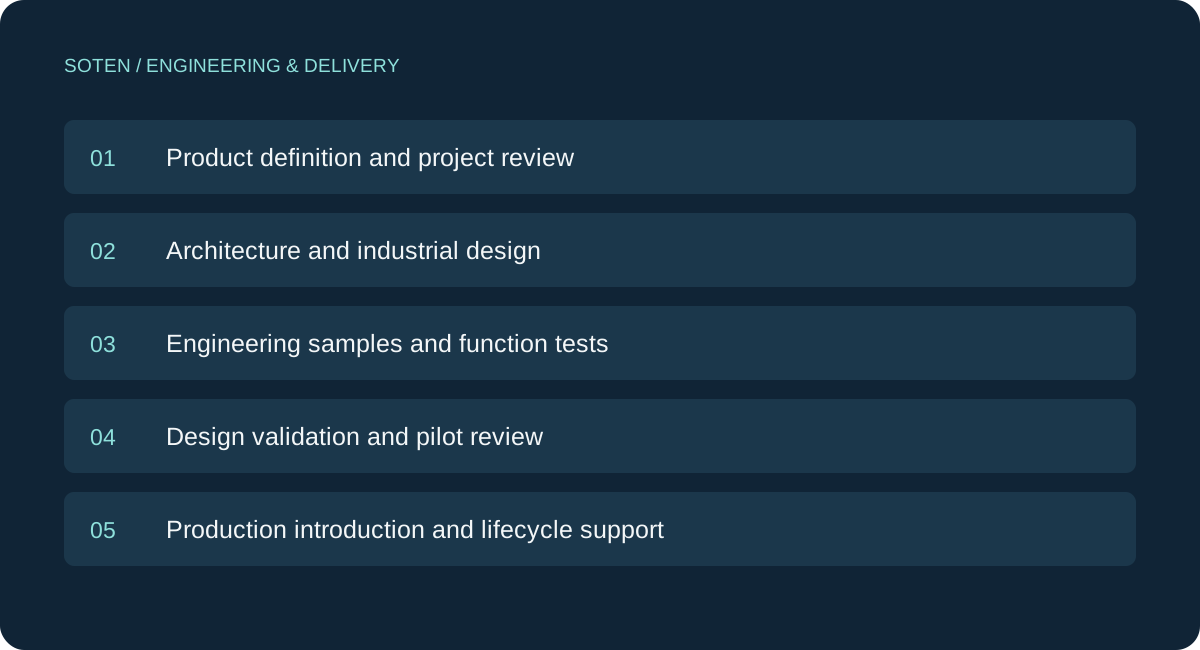
| Product definition and project review | Product requirements, investment scope, ownership and project plan |
| Architecture and industrial design | Reviewed device architecture, industrial and mechanical design |
| Engineering samples and function tests | Engineering samples, software baseline, function and issue records |
| Design validation and pilot review | Design tests, manufacturability review and pilot entry criteria |
| Production introduction and lifecycle support | Production configuration, agreed files and change and support process |
Product, project and engineering responsibilities
| Role | Decision focus | Confirm |
|---|---|---|
| Product owner | User tasks, feature trade-offs and product releases | Requirement priorities, compatibility and interaction examples |
| Project and procurement lead | Scope, budget, milestones and acceptance | Engineering and purchase cost structure, dependencies and deliverables |
| SOTEN engineering and manufacturing | Device feasibility, integration and production consistency | Configuration and interface baseline, samples and test evidence |
| Software and integration partner | Applications, backend and site deployment | Applications and APIs, runtime, joint debugging and support ownership |
Prepare these inputs
| Input area | Details |
|---|---|
| Product definition | Provide target users, critical tasks, differentiation, form constraints, target cost and intended product life. |
| Engineering and commercial boundaries | Agree engineering, tooling and test costs, ownership, source and SDK scope, licenses and acceptance methods. |
Validation, acceptance and change control
Use stage reviews to control changes: confirm architecture before detailed design and pass agreed functional and environmental tests before pilot production. Production relies on controlled BOMs, drawings, firmware, work instructions and test requirements. Define customer, manufacturing and third-party licensed deliverables separately in the agreement.
Product platforms to evaluate
Use these platforms for selection and sample evaluation. Confirm operating systems, modules and accessories per variant; a fully custom device is not equivalent to the reference platform.

H101
Early evaluation of large-screen field applications, data interaction and accessories; define the custom device separately.
View platform and configurations ↗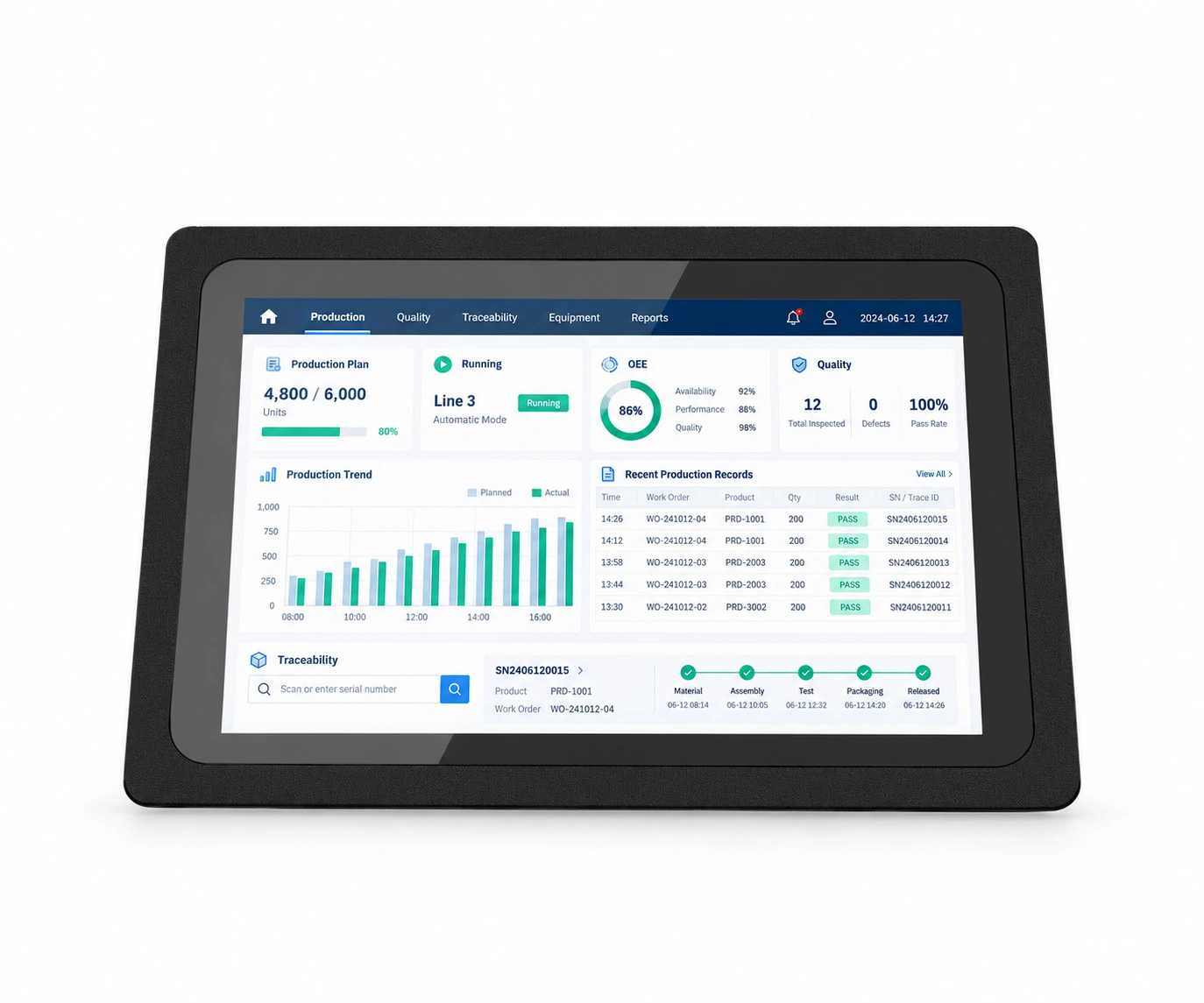
PTC
Compare display sizes, touch technologies and ARM / x86 options when defining a dedicated workstation.
View platform and configurations ↗
K101
Early functional and mounting evaluation for vehicle or fixed-installation interfaces.
View platform and configurations ↗
DH83
Early validation of multimodal enrollment sequences, capture workflows and application interfaces.
View platform and configurations ↗Project questions
Does full customization include all source code and certifications?
The development and licensing agreement defines inclusion. Specify custom work, silicon and third-party code, tooling, design files and certification applications separately, including source usage rights and ongoing maintenance.